


Online English Classes for IELTS & TOEFL Preparation
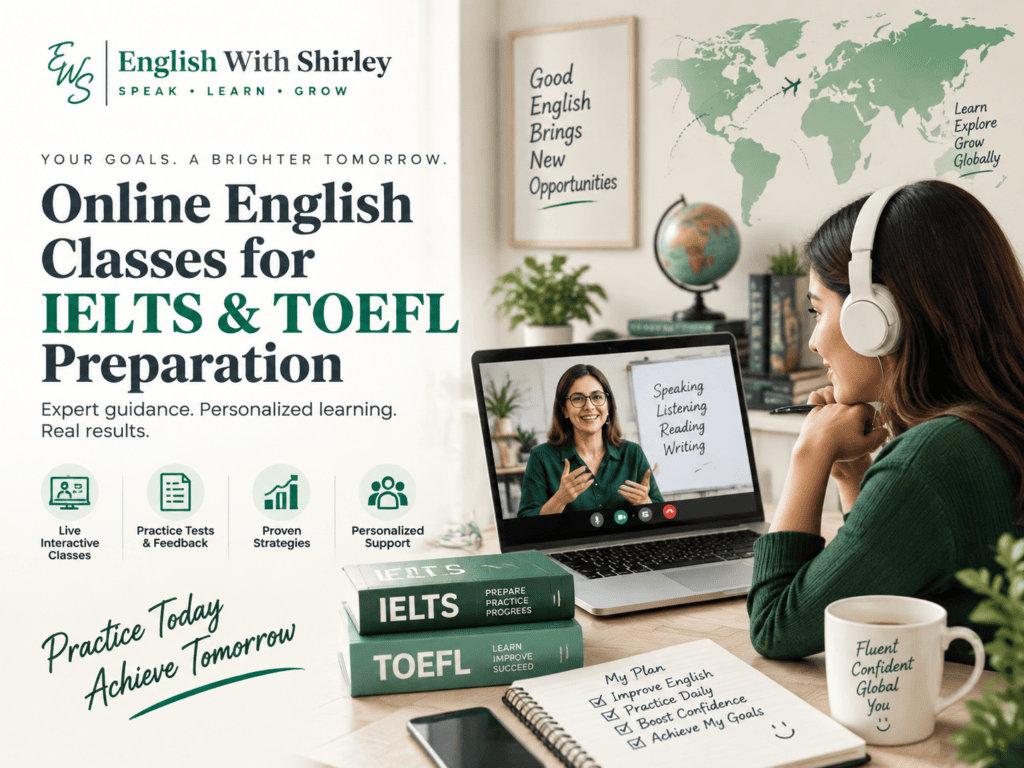
Preparing for international English language exams such as IELTS and TOEFL requires more than memorising grammar rules or learning new vocabulary. You need to develop practical skills in speaking, listening, reading and writing while becoming comfortable using English under exam conditions.
For many learners, online English classes for IELTS and TOEFL can provide a structured way to practise these skills from home. With guided lessons, regular speaking practice, writing exercises and feedback, online learning can make preparation more organised and consistent.
At English With Shirley, learners can explore structured English programs, including IELTS preparation, English proficiency, grammar and writing, and professional communication.
Why Are Online English Classes Useful for IELTS and TOEFL?

IELTS and TOEFL assess different aspects of English communication. While the exact exam formats and scoring systems differ, preparation for either test requires regular practice across multiple language skills.
Online learning can make this practice easier to organise. Instead of studying only from books, learners can combine guided lessons with speaking activities, writing practice, listening exercises and revision.
A structured online program can help you:
- Build stronger English communication skills
- Improve speaking confidence and fluency
- Strengthen grammar and sentence structure
- Develop academic vocabulary
- Practise reading and listening skills
- Improve written organisation and clarity
- Receive feedback on common mistakes
- Follow a consistent preparation routine
IELTS and TOEFL Require More Than Grammar Knowledge
Grammar is an important part of learning English, but exam preparation involves much more than grammar accuracy.
You may know the rules but still hesitate when answering a speaking question. Similarly, you may understand English while finding it difficult to organise ideas quickly in a writing task.
This is why effective preparation should combine grammar with vocabulary, pronunciation, fluency, comprehension, writing structure and communication practice.
If you need to strengthen your foundation first, explore the English Grammar Course to work on sentence structure, tenses and accurate English usage.
1. Improve Your English Speaking Skills
Speaking practice is essential for learners preparing for an English proficiency exam. Regular practice helps you become more comfortable answering questions, explaining ideas and expressing opinions.
During online English speaking classes, learners can practise:
- Answering questions clearly
- Speaking without excessive hesitation
- Using appropriate vocabulary
- Improving pronunciation
- Developing longer and more organised answers
- Expressing opinions and supporting ideas
Consistent speaking practice can also help reduce the habit of translating every sentence mentally before speaking.
For learners who want to build broader communication ability alongside exam preparation, Spoken English for Professionals can also support practical English communication.
2. Build Strong IELTS and TOEFL Vocabulary
Vocabulary plays an important role in both understanding and expressing ideas in English. However, learning long lists of difficult words is not always the most useful approach.
Instead, focus on learning vocabulary in context. For example, choose a topic such as education, technology, health, environment or employment and learn useful words and phrases connected to that topic.
Then practise using those words in sentences, short paragraphs and speaking responses.
This approach helps you understand not only what a word means but also how it can naturally be used.
3. Strengthen Grammar for Better English Communication
Strong grammar helps you communicate ideas more accurately. For IELTS and TOEFL preparation, learners should pay attention to common areas such as:
- Verb tenses
- Subject-verb agreement
- Articles
- Prepositions
- Sentence structure
- Modal verbs
- Complex and compound sentences
- Common grammatical errors
Grammar practice becomes more useful when you apply it in real writing and speaking tasks rather than studying rules alone.
English With Shirley also provides Writing Skills training to help learners develop clearer sentences, organised paragraphs, essays and professional writing.
4. Develop Better IELTS and TOEFL Writing Skills
Writing can be challenging because you need to communicate your ideas clearly within a limited amount of time.
Good writing requires more than correct grammar. You also need to understand how to organise ideas, connect points logically and use vocabulary appropriately.
When preparing for an English proficiency exam, practise writing regularly. Start with short responses and gradually move towards longer structured answers.
Pay attention to:
- Introduction and conclusion
- Paragraph organisation
- Topic sentences
- Supporting ideas
- Linking words
- Grammar accuracy
- Vocabulary variety
- Clarity and relevance
After writing, review your work and identify repeated mistakes. This makes every practice session more valuable.
5. Practise Listening With Different English Accents
Listening practice helps learners become comfortable understanding English spoken at different speeds and in different accents.
Do not limit your listening practice to one speaker. Try interviews, educational videos, conversations, lectures and other English audio resources.
While practising, focus on understanding the main idea first. Then work on specific information, keywords, pronunciation and connected speech.
Regular listening practice can gradually improve both comprehension and vocabulary.
6. Improve Reading Speed and Understanding
Reading preparation is not simply about reading more books. You also need to learn how to identify important information quickly.
Practise reading different types of English content, including articles, educational texts, opinion pieces and informational passages.
During practice, work on:
- Finding the main idea
- Identifying supporting information
- Understanding unfamiliar words from context
- Recognising relationships between ideas
- Locating specific information quickly
As your reading skills improve, you can gradually introduce timed practice to become more comfortable working within exam limits.
7. Use Online English Classes for Regular Practice
One of the biggest advantages of online learning is the ability to create a consistent study routine.
Instead of studying intensively for a few days and then taking long breaks, set aside specific time for English practice each week.
A balanced routine might include:
- Speaking practice on selected days
- Grammar revision
- Vocabulary building
- Reading practice
- Listening exercises
- Writing tasks
- Weekly revision and error correction
Consistency matters because language skills develop through repeated use and practice.
8. Get Feedback on Your English
Self-study can help you learn a lot, but feedback can help you recognise mistakes that you may not notice yourself.
A teacher can help identify problems with pronunciation, grammar, vocabulary, sentence formation, organisation and clarity.
Feedback is especially useful for speaking and writing because these skills involve producing your own English rather than simply recognising correct answers.
English With Shirley focuses on practical English learning and guided practice across communication, IELTS, grammar and writing. Learn more about the learning approach.
IELTS Preparation Through a Four-Skill Approach
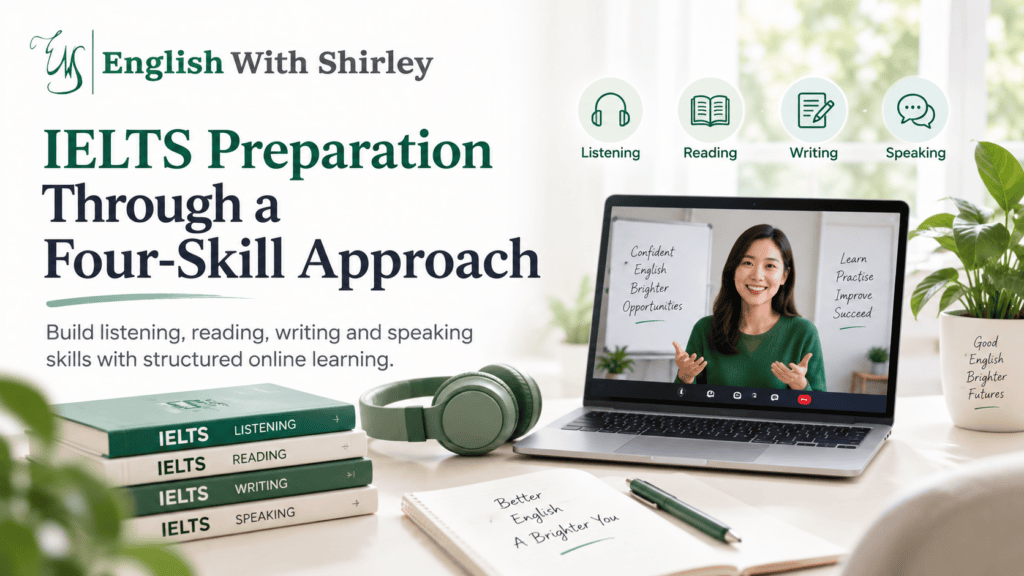
IELTS preparation should cover all four major language skills: listening, reading, writing and speaking.
A balanced preparation plan allows learners to identify weaker areas while continuing to maintain their stronger skills.
For example, if your speaking is comfortable but writing is difficult, you can dedicate additional practice time to writing structure, grammar and vocabulary while continuing regular speaking practice.
English With Shirley offers dedicated IELTS preparation designed around the key skills required for the exam.
Can Online English Classes Help Beginners?
Yes. Beginners can also benefit from online English learning when the course matches their current level.
However, beginners may need to focus first on foundational English skills such as basic grammar, vocabulary, sentence formation and everyday communication before moving into advanced exam-focused tasks.
Starting with the right level can make the learning process more manageable and help build confidence gradually.
English With Shirley offers programs for learners at different stages, including spoken English, grammar, writing and broader English proficiency.
How to Create an Effective IELTS or TOEFL Study Routine

A practical study routine does not need to be complicated. The most important thing is to create a schedule that you can follow consistently.
- Identify your current English level.
- Set a realistic exam preparation goal.
- Identify your strongest and weakest skills.
- Practise speaking regularly.
- Complete reading and listening exercises.
- Write regularly and review your mistakes.
- Build topic-based vocabulary.
- Take practice tests to understand your progress.
- Review mistakes instead of repeating them.
- Adjust your study plan based on your progress.
Common Mistakes to Avoid During IELTS and TOEFL Preparation
Many learners spend a lot of time studying but do not practise effectively. Avoid these common mistakes:
- Memorising vocabulary without learning how to use it
- Focusing only on grammar
- Avoiding speaking practice
- Writing without reviewing mistakes
- Practising only one English accent
- Ignoring time management
- Studying irregularly
- Comparing your progress with other learners
Instead, focus on gradual improvement and consistent practice across all required skills.
Why Choose English With Shirley for English and IELTS Preparation?
English With Shirley focuses on practical English development, communication confidence and structured learning. The available programs include English proficiency, IELTS preparation, grammar, writing, spoken English and business communication.
The approach can be useful for learners who want to improve their English for exams as well as for real-world communication. With dedicated practice in speaking, writing, grammar and communication, learners can work on the areas that matter most to their individual goals.
If your goal is IELTS preparation, you can explore the IELTS Training program and discuss your learning requirements before starting.
Frequently Asked Questions
Can I prepare for IELTS through online English classes?
Yes. Online classes can provide structured practice in speaking, listening, reading and writing. The effectiveness depends on the quality of instruction, regular practice and your consistency.
Are online English classes suitable for beginners?
Yes. Beginners can start with foundational grammar, vocabulary, sentence formation and basic communication before moving towards advanced English or exam-specific preparation.
How can I improve my IELTS speaking skills?
Practise speaking regularly, record your responses, expand your vocabulary, work on pronunciation and get feedback on grammar, fluency and answer organisation.
Should I study grammar for IELTS and TOEFL?
Yes. Grammar is an important part of accurate English communication. However, grammar should be practised alongside speaking, writing, listening and reading rather than studied in isolation.
Can online classes help with IELTS writing?
Yes. Guided writing practice can help you work on sentence structure, paragraph organisation, vocabulary, grammar and clarity. Feedback is particularly useful for identifying repeated writing mistakes.
How often should I practise English before an exam?
Regular practice is generally more useful than occasional intensive study. Create a realistic weekly routine that includes all the skills required for your target exam.
Start Building Stronger English Skills
IELTS and TOEFL preparation is not only about preparing for an exam. It is also an opportunity to develop English skills that can support academic study, professional communication and everyday interactions.
With consistent speaking, listening, reading and writing practice, learners can gradually become more confident and accurate English users.
If you are looking for structured guidance, explore the English With Shirley courses or contact English With Shirley to discuss your learning goals and find a suitable program.