07 Oct
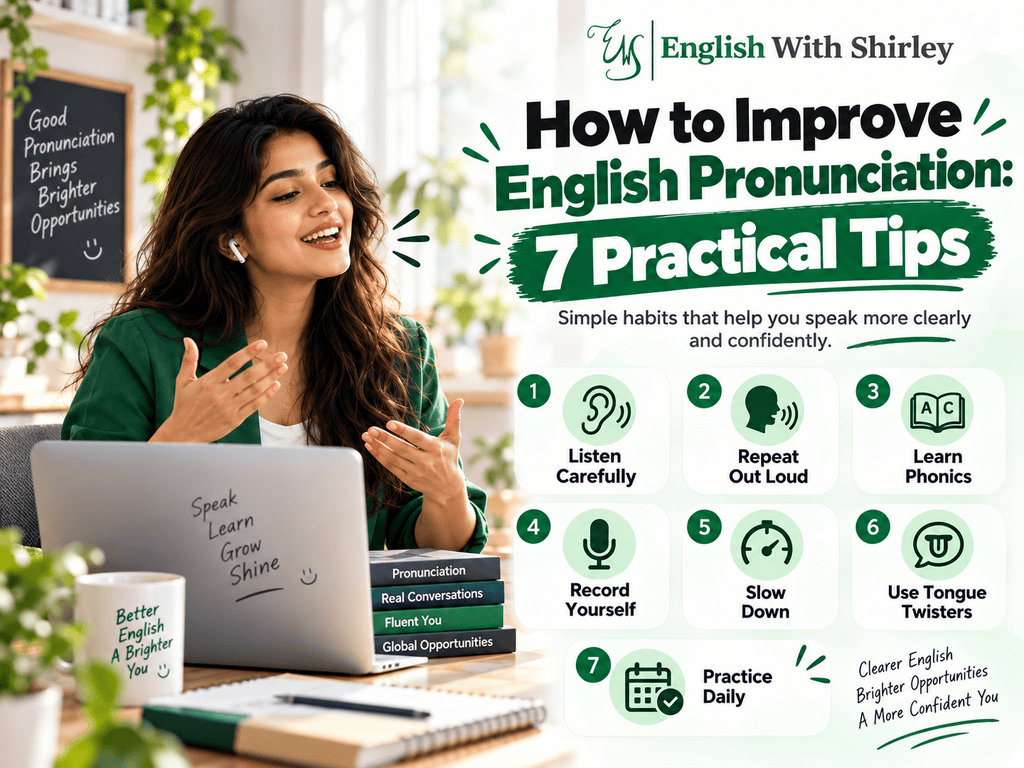
Clear pronunciation is an important part of effective English communication. You may know grammar rules, understand English vocabulary and build correct sentences, but unclear pronunciation can still make communication difficult. Good pronunciation helps listeners understand you more easily and can also improve your confidence when speaking English.
The good news is that pronunciation is a skill you can improve with regular practice. You do not need to completely change your natural accent. Instead, focus on speaking clearly, producing English sounds accurately, using appropriate stress and intonation, and becoming more comfortable with spoken English.
Whether you are a beginner, student, professional or someone preparing for an English proficiency test, these practical English pronunciation tips can help you speak more clearly and confidently.
Why Is English Pronunciation Important?
Pronunciation affects how clearly your message is understood. Sometimes, a small difference in sound can change the meaning of a word. Incorrect pronunciation can also make conversations, presentations, interviews and professional discussions more difficult.
Improving pronunciation is therefore an important part of developing strong spoken English skills for professionals. It can help you communicate more naturally in meetings, presentations, interviews and everyday conversations.
Pronunciation should also be practised alongside grammar, vocabulary, listening and writing. You can strengthen your foundation through a structured English grammar course while continuing to practise speaking.
7 Tips to Improve English Pronunciation

1. Focus on Individual English Sounds
One of the best ways to improve English pronunciation is to understand individual sounds. English contains several sounds that may not exist in your first language, so they can initially feel difficult to pronounce.
Pay particular attention to sounds that are commonly confused, such as:
- /v/ and /w/
- /θ/ as in “think”
- /ð/ as in “this”
- Long and short vowel sounds
- Final consonant sounds
Instead of trying to correct every pronunciation problem at once, choose a few difficult sounds and practise them regularly. Say the sound separately first, then use it in words and finally in complete sentences.
Regular speaking practice through English speaking classes for kids and adults can also help learners become more comfortable with different English sounds.
2. Learn Word Stress
English pronunciation is not only about producing individual sounds correctly. Word stress is also important. In many English words, one syllable receives greater emphasis than the others.
For example, changing the stressed syllable can sometimes change the meaning or grammatical function of a word. Learners should therefore pay attention to which syllable is naturally stressed when learning new vocabulary.
When you learn a new word, do not only write its spelling and meaning. Listen to how it is pronounced and notice the stressed syllable. Then repeat the word several times.
Building stronger English language skills through structured courses can make this type of pronunciation practice more consistent.
3. Practise Sentence Stress and Intonation
Natural English speech involves more than individual words. The way you stress important words and change your voice throughout a sentence can affect how natural and understandable your speech sounds.
Practise listening for:
- Important words in a sentence
- Rising and falling intonation
- Natural pauses
- Speaking rhythm
- Changes in tone during questions and statements
Try reading short conversations aloud. Then listen to a reliable English speaker and compare the rhythm and emphasis with your own speech.
This can be particularly useful for learners taking Business and Corporate English training, where clear communication is important during meetings, presentations and professional conversations.
4. Listen and Repeat English Regularly
Listening is one of the easiest ways to improve your pronunciation naturally. The more you hear accurate English pronunciation, the more familiar you become with its sounds, rhythm and intonation.
Choose short English videos, conversations, podcasts or learning materials. Listen to one sentence and then pause. Repeat the sentence while trying to copy the speaker’s pronunciation and rhythm.
This technique is sometimes called shadowing. You can begin with short sentences and gradually move towards longer conversations.
For additional language-learning resources, you can explore the English With Shirley blog for more English learning guidance and practice ideas.
5. Record Yourself Speaking
Recording yourself is a simple but powerful English pronunciation practice technique. When you speak, you may not notice every pronunciation mistake. Listening to your own recording gives you an opportunity to identify areas that need improvement.
Choose a short paragraph and record yourself reading it aloud. Then listen to the recording and compare it with a reliable pronunciation model.
Ask yourself:
- Are the words easy to understand?
- Am I pronouncing the final sounds clearly?
- Am I stressing the correct syllables?
- Am I speaking too quickly?
- Do my pauses sound natural?
Repeat the exercise after a few days. Over time, recordings can help you notice progress and become more aware of your speaking habits.
6. Practise Pronunciation Through Real Conversations
Pronunciation practice should not remain limited to reading individual words. You need to use English in realistic speaking situations.
Practise introducing yourself, ordering something, asking questions, discussing your work, explaining an idea or participating in a conversation. Real-world practice helps you use pronunciation naturally instead of concentrating on every individual sound.
If you are a professional, practise situations such as:
- Introducing yourself in a meeting
- Speaking with clients
- Giving a presentation
- Participating in interviews
- Explaining a project
- Taking part in online meetings
Structured professional spoken English training can be useful when you want to combine pronunciation with workplace communication.
7. Be Consistent With Your Practice
Pronunciation improvement takes regular practice. Trying to practise for several hours once a month is usually less useful than spending a few minutes practising every day.
Create a simple daily routine. For example:
- 5 minutes of pronunciation listening
- 5 minutes of difficult sound practice
- 5 minutes of reading aloud
- 5 minutes of conversation practice
As your confidence increases, you can extend the practice time. Consistency matters more than trying to achieve perfect pronunciation immediately.
How Can Beginners Practise English Pronunciation?

Beginners should start with simple and familiar words rather than attempting complicated vocabulary immediately. Choose common words and short sentences and practise them repeatedly.
Reading aloud is another useful activity. Start with short paragraphs and focus on clarity instead of speed. You can gradually increase the difficulty as your pronunciation improves.
Beginners can also combine pronunciation practice with English writing skills. Write a few sentences, read them aloud and then record yourself. This connects writing, reading and speaking practice.
How Can You Improve Pronunciation While Learning Grammar?
Grammar and pronunciation are different areas of English learning, but they work together during communication. Correct grammar helps you construct meaningful sentences, while clear pronunciation helps listeners understand those sentences.
For example, when studying verb tenses, do not only complete written exercises. Create a few sentences using the tense and say them aloud. This gives you an opportunity to practise both sentence formation and pronunciation.
A balanced learning approach can include grammar practice, speaking activities, listening exercises and vocabulary development.
Pronunciation Practice for IELTS and English Tests
Clear pronunciation can also support learners preparing for English proficiency examinations. Speaking tasks require candidates to communicate ideas clearly and naturally.
If you are preparing for IELTS, combine pronunciation practice with fluency, vocabulary, grammar and speaking practice. You can explore the IELTS course and preparation resources to develop your overall English skills.
Remember that pronunciation practice should not mean trying to copy a particular accent. The goal is to communicate clearly and effectively.
How to Build a Daily English Pronunciation Routine

A simple routine can make pronunciation practice easier to maintain. Try this seven-day approach:
- Day 1: Identify three English sounds that are difficult for you.
- Day 2: Practise those sounds in individual words.
- Day 3: Use the words in short sentences.
- Day 4: Listen to a short English conversation and repeat it.
- Day 5: Record yourself reading a paragraph.
- Day 6: Practise a real-life conversation.
- Day 7: Listen to your recording and identify improvements.
You can then repeat the cycle with new sounds, vocabulary and speaking situations.
Common English Pronunciation Mistakes to Avoid
While practising English pronunciation, avoid focusing only on speed. Speaking quickly does not automatically make your English sound fluent. Clarity should come first.
Some common mistakes include:
- Ignoring final consonant sounds
- Using the same pronunciation pattern for every word
- Not paying attention to word stress
- Speaking too quickly
- Translating pronunciation directly from your first language
- Avoiding speaking practice because of fear of mistakes
Instead of trying to sound perfect, focus on being understandable, confident and consistent.
Why Choose Structured English Learning?
Self-practice is valuable, but structured learning can give you a clearer direction. A structured programme can combine pronunciation, grammar, vocabulary, listening, writing and speaking practice instead of focusing on only one area.
You can explore the English With Shirley courses to find learning options suited to different English communication goals.
You can also learn more about the approach and teaching philosophy through the About English With Shirley page and explore the Why Choose Us section.
Explore English Learning Options

English With Shirley offers resources and learning options for different learners and goals. You can explore the course collection or view the English course grid to explore available learning options.
For learners looking for seasonal learning activities, the summer and winter programmes and grammar-focused camps can also be explored where relevant.
If you would like to see more about the learning environment, activities and students, visit the English With Shirley gallery.
Frequently Asked Questions
How can I improve my English pronunciation?
Practise individual sounds, listen to clear English speakers, repeat sentences, focus on word stress and intonation, record yourself and speak English regularly.
Can I improve English pronunciation at home?
Yes. You can practise at home by listening to English, reading aloud, recording your voice, repeating conversations and using structured online learning resources.
How long does it take to improve English pronunciation?
The time varies from learner to learner. Regular practice can gradually improve pronunciation, clarity and confidence. Consistency is more important than trying to improve everything in a short period.
Should I try to change my English accent?
You do not necessarily need to change your accent. The primary goal should be clear and understandable communication. Focus on accurate sounds, word stress, rhythm and intonation.
Can pronunciation improve my English speaking skills?
Yes. Better pronunciation can make your spoken English clearer and easier to understand. It works best when combined with vocabulary, grammar, listening and regular conversation practice.
Conclusion

Improving English pronunciation is a gradual process, but it becomes much easier when you practise consistently. Start with individual sounds, learn word stress, listen carefully, practise intonation, record yourself and use English in real conversations.
Most importantly, do not wait until your pronunciation is perfect before you start speaking. Speaking regularly is part of the learning process. With consistent practice and the right guidance, you can become clearer, more confident and more effective in English communication.
If you are ready to strengthen your overall English speaking and communication skills, explore English With Shirley or contact us to learn more about the available English learning options.
Start practising today, speak clearly, and build confidence one conversation at a time.